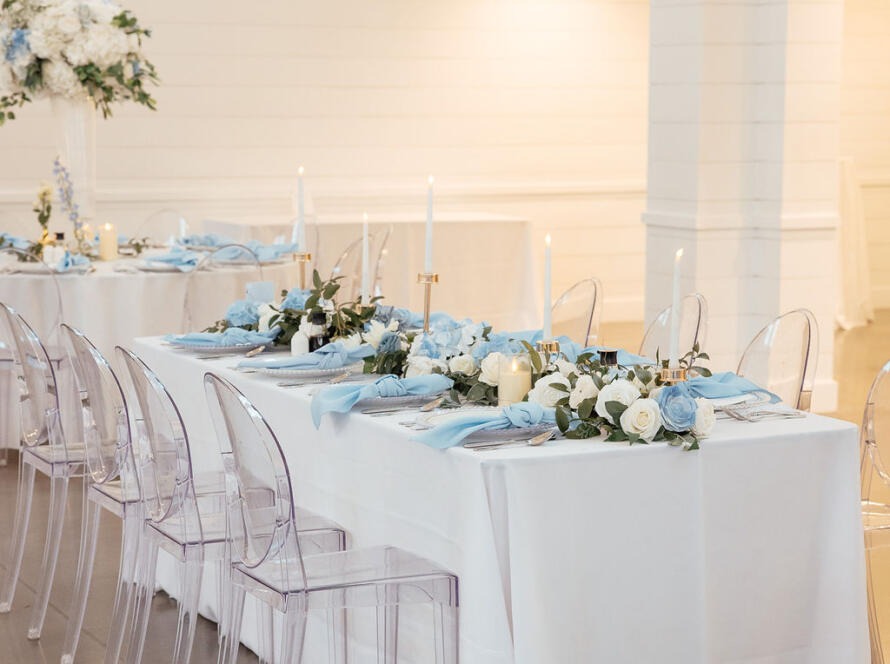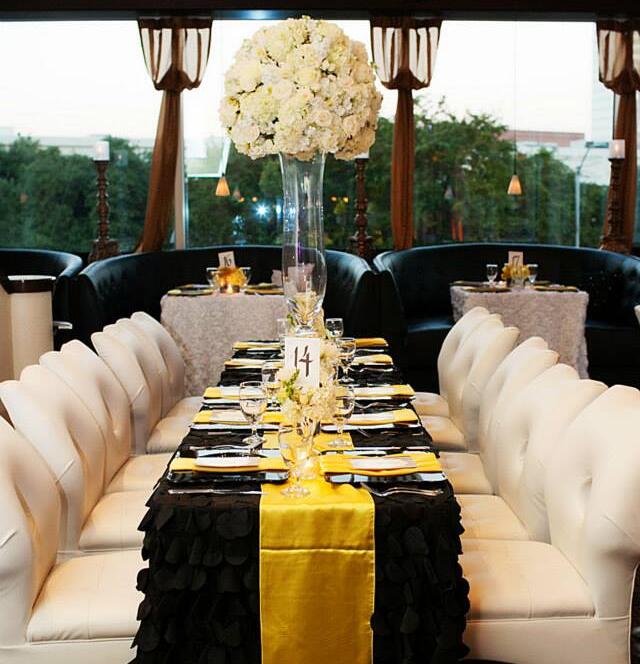

Wedding napkin rentals get less planning time than almost anything else on a reception table, and they probably deserve more. Every guest touches one. It sits against their plate for the whole meal, folds into whatever shape the caterer likes, and usually ends up being the fabric closest to the camera in half your tablescape photos. The napkin is the accent color doing the real work, even when the tablecloth gets the bigger budget line.
That’s the actual decision most couples face with wedding napkin rentals: not just color, but whether renting beats buying outright. Both questions come down to the same handful of factors. None of them require guessing at a price tag to answer honestly.
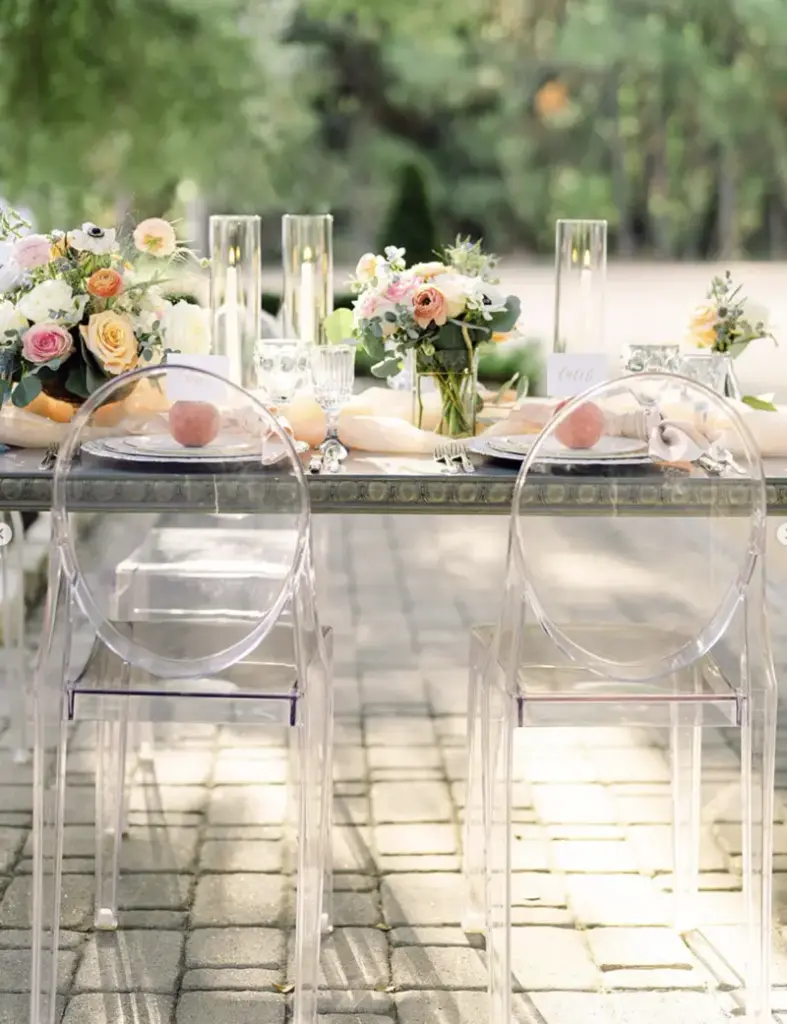
Rent vs. Buy: The Real Trade-Off
Buying works best in a narrow set of cases. A small guest count helps. So does a neutral color you’d genuinely reuse, plus someone willing to store, launder, and press napkins after the event. If that’s your wedding, buying isn’t a bad call.
When Buying Makes Sense
Small, intimate weddings in white, ivory, or a color you already own napkins in are the clearest fit. Comfort handling laundering and storage afterward matters just as much as the color itself.
Why Most Weddings Rent
A 150-guest reception needs 150 matching napkins from the same dye lot. Ordering fabric from three different sellers, because the first one ran out, creates visible color variation across tables. Pulling the full quantity from one rental inventory avoids that problem entirely.
Most couples won’t reuse a burnt orange dupioni napkin or a lavender majestic satin. Renting unlocks a specialty fabric or an exact seasonal shade without owning something built for one afternoon.
Skipping the post-event laundering is a real relief, too. Napkins that touched food, wine, and lipstick need real cleaning, not a home wash cycle. Rental napkins simply go back dirty, and that becomes someone else’s job.
Napkins also rarely get chosen alone. Couples usually pick them alongside a tablecloth, a runner, and sometimes a charger plate. A rental collection built as one system tends to actually match, rather than approximating a color from a swatch photographed under different lighting.
Buying isn’t wrong for the right event. The real question is whether you want to manage fabric logistics yourself, or hand that off.
What Drives Napkin Rental Cost
Once someone settles on wedding napkin rentals, the most common question is some version of “how much does it cost to rent napkins.” There’s no honest single number for that. Pricing moves on a handful of variables, and knowing them beats a figure that won’t apply to your event anyway.
Fabric Tier
Fabric tier is the biggest factor. A classic poplin or hemstitch napkin costs less than a majestic satin with a reversible dupioni side, a velvet napkin, or a specialty print like a Xmas plaid. Heavier, more structured fabrics simply cost more to produce and maintain.
Quantity
Larger orders don’t always scale in a straight line. Delivery, handling, and quality control per napkin stay roughly constant whether you’re ordering for 40 guests or 400.
Delivery vs. Will-Call
Picking up and returning napkins yourself is typically the lower-cost path. Delivery, table setting, and pickup add a labor cost on top of the rental itself.
Damage Waiver
A damage and cleaning waiver is usually built into the rate. It covers normal wine spills and candle wax without a per-stain charge. Confirm exactly what’s covered before the event, not after.
Minimum Orders
Very small events can run into minimum order requirements. Rental houses built for weddings and galas often have a practical floor that a fabric retailer doesn’t.
Is It Better to Rent or Buy Napkins for a Wedding?
Here’s the honest answer: guest count and color matter more than price alone. A 20-person wedding in ivory or white leans toward buying, especially if you’d reuse the napkins later.
Where the Line Usually Falls
A 100-plus guest wedding in a seasonal color or specialty texture leans toward renting. Most couples land somewhere in the middle, renting the napkins and handling smaller reusable pieces, like place cards and menus, separately. Laundering and one-time color access are usually what tip the decision.
Napkin Colors: How to Choose Yours
Color is where most people start. Think of it as a system, not a single decision. A working palette usually spans a few tiers: neutrals like white, ivory, or champagne, one primary accent carrying the wedding’s color story, and sometimes a secondary or metallic accent for texture.
The Available Range
Whites and ivories lead into warm tones like yellow, gold, champagne, brown, and orange. Reds and pinks follow, spanning a soft blush through fuchsia and deep burgundy. The purple and blue spectrum covers lavender, wisteria, dark blue, and cyan, closing out with greens, greys, black, and multicolor prints.
How to Pair Napkins With the Table
A napkin doesn’t have to match the tablecloth exactly to work. Many strong table settings use a neutral linen with one saturated napkin carrying all the color. Coordinating a single accent piece is far easier than committing an entire tablecloth to a bold seasonal shade.
Tone-on-tone is the other common approach. An ivory napkin on an ivory tablecloth, in a different fabric, reads as related without matching flatly. A subtle pattern, like a damask or a textured weave, makes this pairing especially effective.
Napkin Fabrics: What Each One Actually Does
Fabric changes how a napkin folds, how it photographs, and how formal the table feels. It matters more than color in a lot of cases.
Poplin
Poplin is the workhorse fabric. Tight and matte, it folds cleanly and holds a crease well. It reads as classic rather than trendy.
Satin, Matte Satin & Majestic Satin
Sheen level separates this group. High-shine satin catches light dramatically under evening lighting. Matte satin gives a softer version of the same drape. Majestic often comes reversible, with a dupioni or shantung face on one side.
Caprice, Dupioni & Shantung
Visible slub texture defines this structured, slightly crisp category. It reads more organic, less polished than pure satin. Garden and outdoor receptions suit this family well.
Taffeta
Taffeta is crisp and holds dimensional folds. Sculptural napkin styles, fan folds, and anything meant to stand upright call for this fabric.
Hemstitch
Hemstitch brings a delicate, finished-edge texture. Subtle rather than showy, it looks elevated without reading as heavy.
Velvet, Luxury Bark & Rustico
This cold-weather group carries real visual weight. It photographs beautifully for fall and winter weddings. Too many of these bold textures together can overwhelm a smaller tablescape.
Prints & Patterns
Chevron, toile, plaid, floral, and bandana prints do the most work in a single piece. Theme-driven or casual receptions suit them better than a formal seated dinner.
Matching Napkins to the Rest of the Table
The color and fabric conversation gets easier once you’re looking at the whole table system. A hemstitch or poplin napkin reads comfortably against most tablecloths. A majestic or dupioni fabric pairs especially well with a matching table runneror a textured overlay.
Chargers and Placement
Charger plates follow a lot of the same rent-vs-buy logic. Our charger plate rental Houston guide covers that decision in detail.
One wedding place setting convention is worth knowing before you fold anything. At a formal seated dinner, the napkin generally sits left of the forks or on the charger, not on top of the plate. Fan or pocket folds on the charger have become common enough to work either way.
FAQ
How much does it cost to rent napkins?
Pricing depends on fabric tier, quantity, delivery versus will-call, and any damage waiver included. A basic poplin or hemstitch napkin costs less than velvet or a reversible dupioni. A quote based on your guest count and color list gives the most accurate number.
Is it better to rent or buy napkins for a wedding?
For weddings above roughly 50 guests, renting tends to make more sense. Laundering, storage, color consistency, and one-time color use all point toward renting. Buying works better for very small guest counts in a neutral, reusable color.
Do napkins need to match the tablecloth exactly?
Not at all. Some tablescapes pair a neutral tablecloth with a saturated napkin as the accent. Others use tone-on-tone pairings in two different fabrics. Exact matching can actually read as flatter than a deliberate contrast.
What fabric holds up best for a long reception?
Poplin and hemstitch resist visible wrinkling better than lightweight or sheer fabrics. Velvet holds its shape well too, though it shows water spots more visibly than a matte finish.
How far in advance should napkins be reserved?
Peak wedding season books specialty colors and fabrics first. Reserving napkins alongside your other linens is the safest way to guarantee a specific color on your date.
Whether the goal is a simple poplin in one accent color or a full tone-on-tone system with a specialty fabric, our showroom has the full wedding napkin rentals collection out for side-by-side comparison. If you’re weighing napkin rentals Houston options against a DIY purchase, book an appointment and we’ll walk the rent-vs-buy math for your guest count and palette. Contact us to get started.